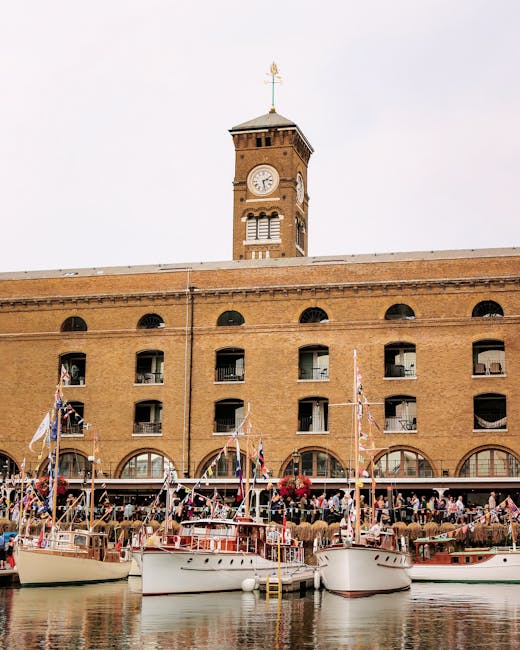
Moving near St Katharine Docks: tide, access and timings
Posted on 29/05/2026
Moving near St Katharine Docks sounds straightforward until you meet the realities of East London logistics: narrow approaches, riverside traffic, shared access points, and the simple fact that some moves feel very different depending on the time of day. If you are planning a flat move, office relocation, or furniture delivery in this part of Wapping and the surrounding docklands, understanding tide, access and timings can save you stress, delays, and a lot of needless lifting about in the rain. It's not dramatic, just practical.
In this guide, we'll break down what actually matters on moving day, how local access works, what timing decisions make the biggest difference, and how to plan a smoother move without overcomplicating it. You'll also find a checklist, a comparison table, and a few real-world examples that reflect how moves around St Katharine Docks tend to play out in practice. If you need support beyond the planning stage, you may also want to look at our services overview or read more about our local team and approach.
Why Moving near St Katharine Docks: tide, access and timings Matters
St Katharine Docks is one of those London locations where the map looks manageable, but the lived reality is a bit more interesting. You've got a waterside setting, mixed residential and commercial buildings, visitor traffic, and a road layout shaped by the docklands rather than a simple suburban grid. That means timing and access can affect everything from van parking to how quickly items reach your front door.
The "tide" part matters less for the actual road journey and more for the broader riverside environment and operational feel of the area. Nearby routes can become busier around peak visitor times, and some buildings or estate-side spaces can be affected by local access controls, loading arrangements, or limited stopping windows. So while the water itself won't swallow your sofa, the surrounding layout can still make a move more delicate than expected. Truth be told, that's where people often get caught out.
If you are moving into a dockside apartment, a managed block, or an office close to the marina, the biggest risks are usually not dramatic ones. They are small delays that stack up: an awkward lift booking, a van arriving too early, a loading bay already occupied, or a route that looks fine until you meet a low bridge, a gate, or a one-way system. A bit of planning avoids most of it.
Key takeaway: around St Katharine Docks, the move is usually won or lost on the details-booking access properly, choosing the right arrival time, and understanding the building's rules before the van turns up.
How Moving near St Katharine Docks: tide, access and timings Works
Most moves near St Katharine Docks follow the same basic pattern as any London relocation, but the local conditions make each step a bit more sensitive. You need to think in layers: building access, street access, loading access, and timing. Miss one layer, and the whole schedule starts wobbling.
Here's the simple version. First, confirm how the property is accessed. Is there a lift? Is it bookable? Is there a concierge? Can the van stop directly outside, or will items need to be carried from a nearby loading point? Then check whether there are restrictions on vehicle size, height, or stopping time. After that, choose a move window that avoids the most congested periods. It sounds obvious. But many people do not do this until the week before, which is a bit late.
Timing matters because local traffic around Tower Hill, Wapping, and the docklands can shift quickly. A move that seems easy at 10:30 a.m. might become awkward at 5:00 p.m. when people are leaving work and the roads feel tighter. If your building has access slots, coordinate the van booking to match them exactly, not roughly. "Around nine" is how you end up waiting on the pavement with a dining chair and nowhere to put it.
For moves involving bulky or delicate items, it helps to read practical guides too, such as our advice on packing for a seamless relocation and the local notes in moving on narrow Wapping roads. Those two topics come up a lot in this area, and for good reason.
Key Benefits and Practical Advantages
Getting the timing and access right does more than save time. It makes the whole day calmer. That may sound like a soft benefit, but on moving day calm is worth a lot. A move that starts well usually ends well. Simple as that.
- Less waiting time: You avoid paying for people and vehicles to stand around while access is sorted out.
- Safer handling: Fewer rushed lifts, fewer awkward turns, and fewer chances of bumping walls, doors, or shared hallways.
- Better building relationships: Concierges, estate staff, and neighbours tend to respond better when the move feels organised.
- Lower stress: You know where the van is going, when it can arrive, and how items will be carried in.
- Cleaner scheduling: You can align keys, lift bookings, parking permissions, and cleaning without the whole day drifting.
There is also a practical money angle. Delays can increase labour time, and late changes can mean rescheduling a van or rearranging helpers. Planning well does not guarantee a perfect move-nothing does, let's face it-but it often turns a potentially messy day into something manageable. That is especially useful if you are moving from a flat with shared access or if you have a tight handover deadline.
Who This Is For and When It Makes Sense
This guide is especially useful if you are moving into or out of a riverside flat, a serviced apartment, a maisonette, or an office near the docks. It also suits anyone receiving large deliveries, or relocating a home office with a few awkward pieces of furniture. If you have ever looked at a sofa and thought, "that is going to be a problem," then yes, this is for you.
It makes particular sense in these situations:
- Flat moves with lift access: when lift booking rules matter as much as the van arrival time.
- Moves near busy visitor areas: where parking and stopping are harder to improvise.
- Office relocations: where you need to avoid disrupting staff, clients, or building operations.
- Student or first-time moves: when you are still learning how London building access actually works.
- Heavy or specialist items: such as pianos, large wardrobes, or white goods.
If your move includes specialist items, it may be worth reading our guide on professional piano moving. For larger households, our house removals service in Wapping is often the better fit. And for smaller, more flexible jobs, a man and van service in Wapping can be a practical choice.
Step-by-Step Guidance
Here is the most useful way to plan a move near St Katharine Docks without overthinking it.
- Check the building rules first. Ask about lift booking, loading bay use, time limits, concierge contact details, and any restrictions on van size.
- Confirm the actual route. Don't just rely on a postcode. Look at where the van can stop, where items will be carried from, and whether the nearest access point is practical for large furniture.
- Choose a sensible arrival window. Aim for a time that avoids peak commuter pressure and fits the building's access rules. Mid-morning often works better than a rushed early start, though each building is different.
- Book parking or loading permissions where needed. Some locations may need advance arrangements. If you are unsure, ask the building management rather than guessing.
- Pack by priority. Keep essentials separate so you are not opening ten boxes looking for kettle leads and passport folders at the same time. Been there, not fun.
- Protect difficult items. Use blankets, covers, bubble wrap, mattress bags, and proper straps where appropriate.
- Keep a contact chain. Make sure the driver, mover, concierge, and you can all reach each other on the day.
- Allow buffer time. A move near the docks should have breathing room. If you think it will take two hours, build in three.
A good local move is often a game of small adjustments. Nothing glamorous. But that is the point.
Expert Tips for Better Results
After enough local moves, you start noticing the same patterns. Here are the ones that genuinely help.
- Move earlier than you think you need to. The first hour of the day is often calmer, and the lift is less likely to be fully booked.
- Keep high-value items together. Passports, chargers, keys, documents, and small electronics should travel separately from general boxes.
- Measure doors and corridors. In dockside buildings, the route from van to room can be more complicated than the flat itself.
- Use the right service level. If the job includes stairs, large items, or a narrow loading area, a standard car-and-driver setup may not be enough.
- Ask about collection timing for shared spaces. Some buildings prefer moving activities outside specific hours, which is easy to miss.
- Have a fallback plan for weather. Rain, wind, and damp pavements can slow everything down. A few extra covers and towels make a difference.
A small but useful tip: if you're moving furniture through communal hallways, protect the corners before the first item moves. That one step saves embarrassment and repair costs. Not exactly thrilling, but very worth it.
For furniture-heavy jobs, our furniture removals in Wapping page explains the kind of support that can make a tighter site much easier to handle. If your move involves temporary holding or delayed access, our storage options in Wapping can also help bridge the gap.

Common Mistakes to Avoid
Most problems near St Katharine Docks come from assumptions. The postcode looks close, so people assume access will be easy. Or they think a van can "just pull in." Or they leave lift bookings until the night before. That sort of thing.
- Assuming roadside stopping will be easy: In busy riverside areas, stopping points can be limited or already taken.
- Ignoring building management rules: This is one of the fastest ways to create delays.
- Booking the wrong time: Early morning and late afternoon can both be tricky depending on the exact street and building.
- Underestimating walking distance: Even a "short carry" feels long with a wardrobe, a mattress, or a washing machine.
- Not preparing items for transit: Loose shelves, unwrapped glass, and open drawers create problems quickly.
- Failing to check lift dimensions: A sofa that seems fine in the hallway can still be awkward in a narrow lift.
There is another subtle mistake too: people often treat the move as one single task. It is better to break it into arrival, unloading, access, and placement. That mindset makes the whole process far less chaotic. A little boring, perhaps. But effective.
Tools, Resources and Recommendations
You do not need a mountain of equipment for a smooth move, but the right basics help a lot. The useful kit tends to be the unglamorous stuff: furniture blankets, tape, straps, gloves, labels, door protection, and trolley aids for heavier items.
For packing support, our packing and boxes in Wapping service can save time if you are starting from scratch or need proper materials quickly. If you want a calmer lead-up to moving day, the practical advice in decluttering before a move is surprisingly useful. Less stuff usually means less stress. Revolutionary, really.
Other genuinely helpful preparation tools include:
- a simple room-by-room checklist
- labels or coloured tape for each room
- a tape measure for doors, lifts, and stair turns
- blanket wraps for furniture edges
- a clear contact sheet with building and driver numbers
If you are moving a specialist item, such as a piano, freezer, or bed frame, use the right approach rather than trying to improvise. Our guides on safe freezer storage and moving beds and mattresses may help with the planning side of those jobs.
Law, Compliance, Standards, or Best Practice
For a move near St Katharine Docks, the main compliance issue is usually not a single law about docks and tides. It is the combination of building rules, parking controls, health and safety expectations, and the mover's duty to handle goods properly and safely. In London, local access restrictions and estate management policies can be just as important as any general transport rule.
Good practice usually includes:
- confirming permission to load or unload in advance
- checking whether the building requires proof of insurance
- protecting communal areas during the move
- using suitable lifting methods for heavy or awkward items
- making sure the route is safe for residents, staff, and visitors
If you are using professional removers, it is reasonable to ask about their insurance and safety arrangements and their wider health and safety policy. That is not being picky. That is being sensible. And if you want to understand what happens with payments, deposits, or booking confidence, the page on payment and security is worth a look too.
Best practice also includes honesty about timing. If access is limited, say so early. If a lift is small, say so early. If there is no direct parking, say so early. Everyone has a better day when the facts are clear.
Options, Methods, or Comparison Table
Not every move near the docks needs the same approach. The best method depends on what you're moving, how much there is, and how tricky access looks on the ground.
| Moving method | Best for | Strengths | Watch-outs |
|---|---|---|---|
| Man and van | Small flats, single-room moves, light furniture | Flexible, practical, usually ideal for short local moves | May be limited for heavy lifting or many items |
| Full house removal | Family homes, multiple rooms, higher item counts | More capacity, better for coordinated loading and transport | Needs more planning and a clearer schedule |
| Flat-focused removal | Managed buildings, lift access, apartment relocations | Well suited to building rules and tight access points | Lift bookings and timing need to be exact |
| Specialist item move | Pianos, delicate furniture, heavy or awkward items | Safer handling, better equipment, lower damage risk | Usually needs more preparation and expertise |
If your move is small and straightforward, a man with a van in Wapping can be enough. If it is a larger or more involved relocation, the broader removals service in Wapping may be the better fit.
Case Study or Real-World Example
Picture a small two-bedroom flat move near St Katharine Docks on a weekday morning. The property has a lift, but it needs booking. The building manager allows a one-hour loading slot outside the front entrance. The road is not impossible, but it is busy enough that a late van arrival would be annoying. Nothing dramatic, just enough to spoil the flow.
In a job like that, the most successful approach is usually:
- confirm the lift booking the day before
- pack the essentials separately
- arrive slightly earlier than the loading slot
- move larger furniture first
- keep one person available to speak with building staff
When that kind of move goes well, it tends to feel almost boring. Which is exactly what you want. The boxes come down, the van is loaded without drama, and by lunchtime you're already placing furniture in the new place instead of chasing access problems. I've seen plenty of moves lose an hour just because nobody knew where the loading point was. An hour. Gone.
That is why local knowledge matters. The more you understand the area's pace, the easier it is to keep everything moving in step. If you are still early in the planning stage, our pricing and quotes page can help you think through the likely scope before you commit.
Practical Checklist
Use this checklist a few days before moving near St Katharine Docks. It keeps the small stuff from turning into moving-day chaos.
- Confirm the full address and any access notes.
- Check whether the building needs lift booking or concierge sign-in.
- Ask where the van can legally and safely stop.
- Measure the largest furniture items and compare them with doorways and lift dimensions.
- Prepare protective covers for floors, furniture, and fragile items.
- Label boxes by room and priority.
- Set aside essentials for the first night.
- Share driver and building contact details with everyone involved.
- Allow extra time for traffic, stairs, and handover delays.
- Keep cleaning supplies handy for the final sweep-out.
If you are moving out of a flat, the guide to flat removals in Wapping can also give you a stronger sense of how to structure the day. And if you are leaving a property behind, our article on pre-move-out cleaning is worth a quick read before the keys are handed over.
Get a free quote today and see how much you can save.
Conclusion
Moving near St Katharine Docks is not difficult because of one single obstacle. It is the combination of access, timing, building rules, and local traffic that needs careful handling. Once those pieces are in place, the move becomes much more manageable. More than manageable, actually. It can feel smooth.
The key is to plan like someone who has done this before: check the access details early, book the right time, protect your items properly, and don't assume the nearest route is the easiest one. If the job is bigger than you expected, or the access looks tighter than first thought, get advice before the move day rather than after. That small decision can save a lot of hassle.
And if you are still weighing up your options, remember this: the best move is rarely the one with the most effort. It is the one that feels organised from the start.