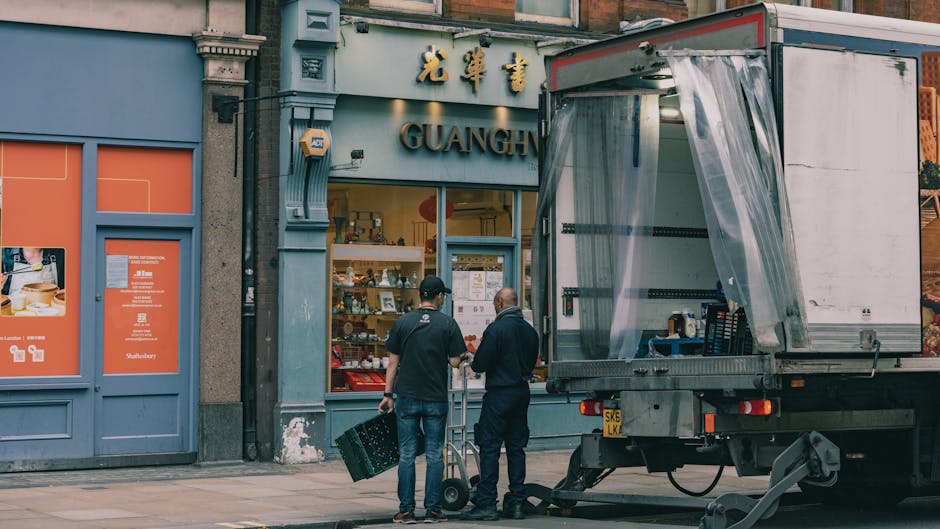
Wapping High Street removals tips for tight access jobs
If you are planning a move around Wapping High Street, the biggest challenge is often not the distance - it is the access. Narrow entrances, limited loading space, awkward stairways, busy traffic, and buildings that were never designed for modern moving vans can turn a simple move into a long day very quickly. These Wapping High Street removals tips for tight access jobs are designed to help you plan properly, avoid costly delays, and keep the move calm and controlled. Truth be told, a little preparation makes a huge difference.
In this guide, you will find practical advice on assessing access, choosing the right vehicle, packing for small lifts and stairs, handling parking sensibly, and deciding when to use a man and van rather than a larger removal setup. We will also cover common mistakes, useful tools, and a realistic step-by-step plan you can follow without overcomplicating things.
Table of Contents
- Why Wapping High Street removals tips for tight access jobs matters
- How Wapping High Street removals tips for tight access jobs works
- Key benefits and practical advantages
- Who this is for and when it makes sense
- Step-by-step guidance
- Expert tips for better results
- Common mistakes to avoid
- Tools, resources and recommendations
- Law, compliance, standards, or best practice
- Options, methods, or comparison table
- Case study or real-world example
- Practical checklist
- Conclusion
- Frequently asked questions
Why Wapping High Street removals tips for tight access jobs Matters
Wapping High Street has the kind of access issues that can catch people off guard. Some properties sit behind tight doorways or narrow communal hallways, while others have limited stopping space outside, especially at busier times. If you turn up with the wrong vehicle, too few helping hands, or no plan for where to park, you may end up carrying furniture much further than expected. That adds time, strain, and risk.
For a tight-access job, the move is rarely about brute force. It is about sequencing. Which items should go first? What can be dismantled? Where can the vehicle safely wait? Can the sofa be turned on its end, or does it need to be taken apart? These questions matter because they shape the whole day.
There is also a stress factor. People often underestimate how tiring it is to keep repeating a short carry through a narrow stairwell. After the third or fourth trip, even a lightweight box starts to feel annoying. And the moment you get one big item stuck in a doorway, everything slows down. This is exactly why access planning deserves its own attention.
Practical summary: Tight-access removals succeed when you plan the route, reduce the size of awkward items, choose a suitable vehicle, and keep the load sequence simple. That is the real trick.
If you want the move to feel more organised from the start, it helps to understand the service options available. Pages such as removal services, house removals, and home moves can be useful if you are comparing the kind of help you may need. For larger or more structured moves, house movers and house removalists may suit you better.
How Wapping High Street removals tips for tight access jobs Works
The process is simple in principle, though the details matter. A tight-access removal usually starts with an access check, then moves into packing, route planning, vehicle selection, and the actual move. The better you understand those stages, the less likely you are to get caught by a last-minute surprise. And there is always one, isn't there?
1. Assess the access before moving day
Start by measuring the places that cause problems: front doors, internal doors, stair turns, lift dimensions, height clearances, and any narrow corners. If you can, walk the route from the property to where the vehicle would stop. Look for door thresholds, uneven paving, bollards, railings, and shared entrances. A quick look on a wet evening can also reveal how slippery the route might be. Small detail, big difference.
2. Match the vehicle to the street, not just the load
For some Wapping jobs, the ideal vehicle is not the biggest one, but the most manoeuvrable one. A smaller moving van or removal van can sometimes be a smarter choice than a larger truck if the road layout is awkward. If the street is tight and parking is limited, using a compact setup may reduce waiting time and keep the move smoother.
3. Pack with the route in mind
Packing for tight access is different from packing for an easy ground-floor move. Boxes should be steady, not overfilled. Heavy items need to stay low. Fragile items should be well protected, because bumping a box against a stair rail is exactly the sort of little mishap that ruins the mood. Use smaller boxes for books and kitchenware so they remain manageable on stairs.
4. Plan the sequence of loading and unloading
Large flat items, mattresses, wardrobes, and appliances should be loaded in a deliberate order. If the access at the destination is awkward, place the first-needed items at the back of the van only if they are genuinely needed first. Otherwise, keep the sequence practical. The person directing the move should be decisive. Hesitation eats time.
5. Keep the team briefed
Everyone involved should know the plan: where to park, which entrance to use, which items are awkward, and who is handling the keys or building entry. In a tight-access job, there is no room for guesswork. Even one unclear instruction can create an annoying bottleneck near the doorway.
Key Benefits and Practical Advantages
Good planning brings benefits that are easy to feel on the day itself. Less carrying. Fewer delays. Lower risk of damage. Fewer awkward conversations with neighbours. It also means the move looks and feels more professional, even if it is just a small flat or a one-bedroom move.
- Less physical strain: Smaller loads and better vehicle positioning mean fewer unnecessary trips.
- Reduced damage risk: Careful route planning cuts the chance of scuffed walls, chipped paint, or bent furniture.
- Faster turnaround: When the access is clear, the team can keep moving instead of stopping to rethink every item.
- Better parking management: A well-planned arrival is less likely to annoy local traffic or block a passage.
- Lower stress: You know what is happening, which is half the battle on moving day.
There is also a budget benefit. The less time spent wrestling with access problems, the less likely you are to rack up extra labour hours or feel like the day has drifted away from you. If you are comparing options, the removals page and the movers page can help you think through what level of support is appropriate.
One more thing: tight-access jobs tend to reward calm planning more than speed. That is not glamorous, but it is true.
Who This Is For and When It Makes Sense
This kind of advice is useful for a surprisingly wide range of people. You might be moving out of a first-floor flat, a small townhouse, or a converted building with a narrow stairwell. You might be relocating a studio, a family home, or a compact office with limited loading access. The common thread is not the size of the move - it is the challenge of getting things in and out without chaos.
This guide makes sense if you:
- live on or near Wapping High Street and have limited curb space;
- need help moving bulky furniture through tight hallways;
- are worried about stair turns, shared entrances, or awkward lifts;
- have a deadline and cannot afford delays;
- are choosing between a full team and a lighter man with van removal style setup;
- want a practical move without overpaying for more capacity than you need.
For business relocations, the same principles apply. Tight access in an office block can be just as fiddly as a home move, especially when there are desks, monitors, filing cabinets, and building rules to respect. In those cases, commercial moves and office removals are worth reviewing, along with office relocation services if the move is more involved.
Step-by-Step Guidance
If you want a clean, low-drama move, use this simple sequence. It is not fancy, but it works.
- Survey the access thoroughly. Check both addresses, not just one. Measure doors, stair widths, and any awkward corners. If a sofa has to pass through a turn, measure the widest point, not just the opening.
- Identify the biggest problem item first. Usually it is a sofa, wardrobe, mattress, or fridge. If that item can move, the rest is easier. If it cannot, you need a plan before moving day.
- Decide what should be dismantled. Flat-pack items, bed frames, table legs, and some shelving units are often easier to take apart than to force through a tight route.
- Book the right vehicle. For narrow streets and tricky approach roads, a more compact man with a van style option may be ideal. For larger loads, a bigger van or truck may still be sensible if access allows.
- Pack by weight and fragility. Keep heavy boxes manageable and label fragile items clearly. It sounds obvious, but this is where people often get sloppy.
- Reserve space where possible. If your building or street has shared access, make sure everyone involved knows the move window. A vehicle stopped in the wrong place can create friction fast.
- Prepare entry and exit points. Door wedges, floor protection, and clear hallways save time. Even moving a coat rack out of the way can prevent a knock.
- Load in a logical order. Use the largest items first if they create the structural base in the van. Fill voids with boxes and soft items only where safe.
- Keep a small essentials bag separate. Keys, documents, chargers, snacks, water, medication, and basic tools should stay with you. Do not bury them in a box pile.
- Walk the route again before the first lift. A final check takes two minutes and can save a headache later.
If you are packing yourself, professional packing and unpacking services can be helpful for fragile items or when you simply do not want to spend the evening labelling kitchen boxes while standing in a half-packed room. Been there, honestly.
Expert Tips for Better Results
These are the little things that make a big difference in real life. Not theory. Not brochure language. Real-world stuff.
Choose smaller boxes more often
People like to fill a large box because it feels efficient. It rarely is. On tight stairs, a big box becomes awkward, and the weight distribution turns weird in your hands. Smaller boxes are easier to carry, stack, and pass through a narrow doorway.
Protect the corners and edges first
On a tight job, furniture corners are the first things to hit a wall or banister. Use covers, blankets, or padding on the sharp edges before you even begin moving. The damage usually comes from one careless swing, not from dramatic impact.
Separate "move now" items from "can wait" items
It sounds obvious, yet it is one of the most useful habits. Have a pile for essentials and a pile for less urgent items. That way the access route stays clearer, and you are not constantly stopping to ask, "Where did the kettle go?"
Use the weather to your advantage
If the route involves wet pavement, steps, or a shared courtyard, take extra care with grip and footwear. Early morning frost or evening rain can make a short route feel much longer. In Wapping, where the wind off the river can surprise you, that matters more than people expect.
Measure bulky furniture properly
Do not guess. Measure height, width, and depth, and compare those numbers to the narrowest point on the route. A wardrobe might fit through the hallway but snag at the stair landing because the turn is tighter than expected. That is the classic move-day surprise.
Keep a tool kit close
A screwdriver, Allen keys, tape, scissors, and a small torch can rescue a move that would otherwise stall. Nothing dramatic. Just practical. The kind of thing you are glad you packed when a bed frame needs one final bolt removed.
Ask for help early, not late
If access feels borderline, get advice before moving day. A quick chat about route, vehicle size, and item dimensions can prevent a lot of improvising. The worst time to realise the van is too large is when it is already outside the property.
Common Mistakes to Avoid
Tight-access moves do not fail because of one huge error. They fail because of several small ones piling up. Let's face it, that is how most moving headaches happen.
- Booking the wrong vehicle size: Too large can mean poor parking; too small can mean too many trips.
- Ignoring stair turns: A measured door means nothing if the stair bend makes the item impossible to angle through.
- Overpacking boxes: Heavy boxes become unsafe and difficult to manoeuvre.
- Leaving dismantling until the last minute: This creates delays and increases the chance of damage.
- Failing to brief neighbours or building managers: Shared access can become awkward very quickly.
- Not protecting walls and door frames: A narrow route leaves little room for error.
- Loading in a random order: If everything is thrown in at the same pace, unloading becomes messy later.
- Forgetting the essentials bag: One small oversight can be deeply annoying on arrival.
Another common issue is assuming every removal company handles tight access the same way. They do not. Some are set up for larger house moves; others are more flexible. Reading the service details on pages like removal company and removal companies can help you judge whether the service style matches your property.
Tools, Resources and Recommendations
You do not need a van full of specialist gear, but a few simple tools make tight-access work much easier. The right kit often saves more time than extra muscle.
| Tool or resource | Why it helps | Best used for |
|---|---|---|
| Furniture blankets | Protect walls, frames, and delicate finishes | Sofas, wardrobes, tables, appliances |
| Ratchet straps | Keep items secure in transit | Stacked furniture, long boxes, white goods |
| Door protectors | Reduce scuffs on tight entries | Shared hallways, narrow flats, stairwells |
| Two-wheel trolley | Helps move boxes and appliances safely | Ground-floor carries, short routes, heavier loads |
| Allen keys and screwdriver set | Useful for dismantling and reassembly | Beds, tables, shelving units |
| Labels and tape | Speeds up unloading and room sorting | Kitchen, bedroom, and fragile box organisation |
If you need a straightforward vehicle-and-labour option, the man and van removals page is a useful place to understand a lighter, more flexible style of moving support. For heavier loads or more structured jobs, removal van and removal truck hire may also be worth comparing, depending on how much access you actually have.
And yes, if you are only moving a handful of items - a bed, a couple of cupboards, and some boxes - then furniture pick up may be the more sensible route rather than overplanning a full-scale removal. Simple is fine. Sometimes simple is best.
Law, Compliance, Standards, or Best Practice
For a move like this, legal and compliance issues are usually about safety, access, and being considerate rather than complex regulations. In London, there may be local parking restrictions, loading limits, or building rules that affect where and when a vehicle can stop. It is worth checking those in advance with your building management or the relevant local authority guidance, even if only to avoid unpleasant surprises on the day.
Best practice also matters. Reputable movers should work in a way that protects people, property, and items in transit. That means sensible lifting, clear communication, and appropriate care around stairs, shared areas, and vehicle loading. A solid health and safety policy and clear insurance and safety information are useful trust signals when you are comparing providers.
It is also sensible to understand terms before booking. Service scope, cancellation terms, payment expectations, and responsibilities for access issues are all things worth reading properly. No one enjoys doing that, but it can save a lot of confusion later. If you are unsure, review the terms and conditions and payment and security pages before you commit.
For environmentally minded moves, reducing waste and reusing packing materials can be helpful too. The recycling and sustainability page may be useful if you are trying to declutter responsibly during the move.
Options, Methods, or Comparison Table
There is no single best method for every tight-access move. The right choice depends on load size, parking space, stair access, and how much dismantling you are willing to do.
| Approach | Best for | Pros | Watch-outs |
|---|---|---|---|
| Small van / man and van | Compact moves, narrow streets, limited stopping space | Easier manoeuvring, often faster on tight roads | May need more trips if the load is large |
| Standard removal van | Medium-sized home moves with manageable access | Better capacity without being too cumbersome | Can still be awkward if parking is poor |
| Large truck / removal truck hire | Bulkier moves where access is actually wide enough | More space, fewer trips | Harder to position in narrow streets |
| Full packing and moving support | Busy households, fragile items, time-sensitive moves | Less personal workload, more structure | Usually more expensive than self-packing |
If you are still deciding, think in terms of access first and volume second. A huge van is no use if it cannot be parked properly. On the other hand, a tiny vehicle can create extra trips that eat the whole afternoon. The sweet spot is the one that fits the street and the property, not the one that sounds impressive on paper.
Case Study or Real-World Example
Here is a realistic example. A couple moving from a top-floor flat near Wapping High Street had one large sofa, a double bed, three shelving units, and about twenty boxes. The stairwell was narrow, the front entrance opened onto a shared corridor, and street space was limited. On first look, the move seemed simple enough. It wasn't.
The turning point was preparation. They measured the sofa and realised it would not make the corner in one piece. So they dismantled it in advance. They also used smaller boxes for books, kept fragile items separate, and moved the bed frame first so the flat cleared faster. The vehicle used was compact enough to stop without blocking the lane, which saved a lot of back-and-forth. Nothing dramatic happened, and that was the whole point.
The move still took effort, of course. Someone had to keep opening doors, someone had to direct the load sequence, and there was a brief moment when the mattress looked far too large for the hallway. But because the access plan was clear, the team kept going instead of stopping to problem-solve at every corner. The result was a steadier day, fewer strained lifts, and a lot less noise from frustrated sighs. You know the kind.
Practical Checklist
Use this checklist the day before and again on the morning of the move.
- Measure doorways, stair turns, and lift dimensions.
- Check the widest item against the narrowest access point.
- Choose the most suitable vehicle size for the street.
- Confirm parking, loading, and arrival timing.
- Dismantle awkward furniture in advance.
- Pack heavy items in smaller, safer boxes.
- Label fragile boxes clearly.
- Protect walls, floors, and door frames.
- Keep tools, keys, and essentials with you.
- Brief everyone involved on the route and sequence.
- Have a backup plan for weather or access delays.
- Check service details, pricing, and payment terms before booking.
If you are booking help for a domestic move, the pages for home moves, house removals, and house movers can give you a better sense of which service style suits your situation.
Get a free quote today and see how much you can save.
Conclusion
Tight-access removals on or around Wapping High Street are very manageable when you treat access as the main job, not an afterthought. Measure carefully, pack sensibly, choose the right vehicle, and keep the route as clear as possible. That combination solves more problems than most people realise. It is not about making the day perfect. It is about making it controlled, safe, and far less stressful.
Whether you are moving a small flat, a family home, or a compact office, a thoughtful approach will usually save time and reduce pressure. And if the street looks awkward from the start, that is fine. Awkward just means it needs planning. With the right setup, even a fiddly move can go smoothly enough to feel almost boring - which, honestly, is sometimes exactly what you want.
Frequently Asked Questions
What is the best vehicle for tight access removals on Wapping High Street?
Usually the best vehicle is the smallest one that can still carry your load comfortably. A compact van is often easier to position on narrow streets, while a larger removal van may suit medium-sized moves if parking allows.
How do I know if my sofa will fit through the stairwell?
Measure the sofa at its widest point, then compare that with the tightest point on the route, including turns and landings. If it looks borderline, dismantling the sofa or taking the legs off may be the safer option.
Should I book a man and van or a full removal team?
It depends on the load size, access, and how much help you want. A man and van service can work well for smaller or more flexible jobs, while a fuller team is better for larger, more structured moves.
Do tight-access moves take longer?
They often do, especially if there are stairs, long carries, or awkward parking. Good planning can reduce the delay, but it is wise to leave extra time rather than expecting a quick in-and-out job.
What should I pack separately for a move with difficult access?
Keep essentials such as keys, chargers, documents, medication, snacks, and cleaning items separate. It saves you from digging through boxes when you arrive tired and just want the kettle on.
Is dismantling furniture worth the effort?
Very often, yes. In tight-access moves, dismantling can prevent damage, reduce strain, and make the item fit safely through narrow points. It is one of the best time investments you can make.
How can I protect walls and door frames during a narrow move?
Use blankets, padding, and careful handling, especially around corners and stair turns. A small bit of protection at the start can prevent visible scuffs and awkward repair jobs later.
What if parking outside my property is limited?
That is common in tighter parts of Wapping. In that case, it helps to plan the loading window carefully, use a vehicle that is easy to position, and prepare the route so the team is not wasting time once parked.
Are office moves with tight access handled differently?
Yes, slightly. Office moves often involve monitors, desks, filing cabinets, and building access rules, so scheduling and item labelling become even more important. Commercial planning tends to need more coordination.
How far in advance should I prepare for a tight-access move?
Ideally a few days to a week in advance for measuring, dismantling, and arranging the right service. If the move is larger or the access feels especially awkward, earlier is better. No prize for leaving it to the last minute.
Where can I check service details before booking?
Start with the relevant service pages, such as removals near me, pricing and quotes, and contact us if you need to ask specific questions before confirming anything.
What is the biggest mistake people make with tight access jobs?
The biggest mistake is underestimating the access problem. People focus on volume and forget the route. In practice, the route, parking, and turning space often matter just as much as the items themselves.